
Piston · Buyer's guide
Beechcraft Bonanza buyer's guide:
what the records reveal
Every number on this page is computed from official U.S. government records — the FAA registry, the NTSB accident database, FAA Service Difficulty Reports and the Federal Register — for the 10,265 Beechcraft Bonanza aircraft currently on the U.S. registry, and reconciled to the airframes actually in this fleet: U.S. registrations get reused, so records filed while a registration belonged to a different aircraft are excluded. Nothing here is opinion or marketing copy: it is what the public record says about this type, and what that means for your pre-buy.
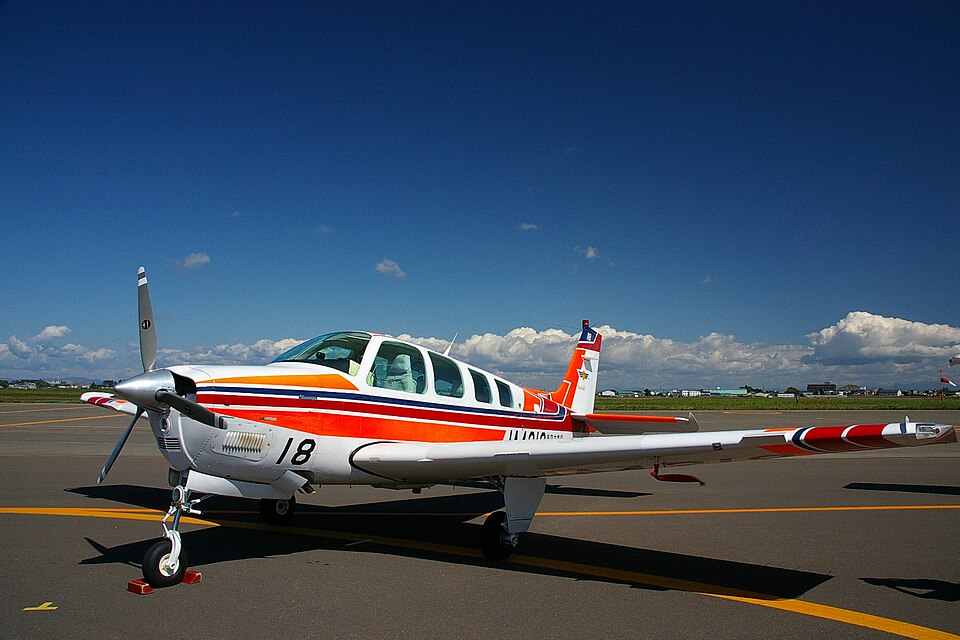
The U.S. fleet at a glance
The FAA registry lists 10,265 Beechcraft Bonanza aircraft, built between 1947 and 2026. The largest concentrations are registered in TX (1,296), CA (1,163), FL (658). A large, active fleet works in a buyer's favor: parts supply, mechanic familiarity and comparable sale prices are all easier to establish than on a rare type.
Where this fleet reports maintenance difficulties
FAA Service Difficulty Reports are filed by mechanics and operators when a component fails or malfunctions in service. Across the Beechcraft Bonanza fleet, 819 reports have been filed against this type since 1995 — most airframes have zero reports on file, with a mean of 0.1 per airframe. The systems mechanics report most on this type:
- JASC 32 — Landing Gear : 132 reports fleet-wide
- JASC 85 — Reciprocating Engine : 123 reports fleet-wide
- JASC 33 — Lights : 108 reports fleet-wide
- JASC 74 — Ignition : 54 reports fleet-wide
- JASC 27 — Flight Controls : 42 reports fleet-wide
Filing is voluntary, so these figures understate reality — but the RELATIVE weight of each system is exactly where an experienced buyer points the pre-buy inspection first. Reconciliation note: 745 further reports filed under these registrations were excluded because the aircraft model declared in the report shows they belong to previous holders of the same N-numbers.
The accident record, in numbers
The NTSB database holds 263 accident or incident records serial-matched to Beechcraft Bonanza airframes in this fleet since 2008 — about 2.6 per 100 currently registered aircraft, of which 48 involved fatal injuries (most recent record: 2026). A further 12 records filed under the same N-numbers belong to different airframes (reused registrations) and are excluded.
Method: the denominator is the fleet currently on the FAA registry. Airframes destroyed and later deregistered leave that denominator, so this ratio understates lifetime accident history — read it as a fleet-profile indicator, not an accident rate. Fleet totals also reflect how the type is flown (training and commercial work versus private use), not just the machine itself.
Fleet-level counts tell you about the TYPE; what matters for your purchase is whether the specific airframe you are considering appears in that database — and U.S. registrations get reused, so a serial-number check matters. That per-aircraft lookup is exactly what a TailGuard report does.
Airworthiness directives to know about
2 airworthiness directives published since 2004 in our Federal Register database and matched to this type are currently open. The full list of directives applicable to an older airframe is longer — build it at drs.faa.gov. The most recent in our database:
- AD 2019-23-10 · effective 2019-11-22 — inspecting the right aileron flight control cable end fittings (terminal attachment fittings) and replacing any damaged cable assembly
- AD 2008-13-17 · effective 2008-08-06 — replace certain circuit breaker toggle switches with improved design circuit breaker toggle switches
Superseded directives are excluded from these counts. Directives apply by type — no database can tell you whether a given airframe complied. Only its logbooks can, and that is the single most important paperwork check of your pre-buy.
Ownership turnover
Comparing monthly FAA registry snapshots from Aug 2023 to Jun 2026, 1,953 of the 10,264 observed Beechcraft Bonanza airframes — 19% — changed registrant at least once. This includes registrant-name changes that are not market sales — such as a transfer to an owner's LLC or trust — and newly delivered aircraft registered to their first buyer within the window. A recent ownership change is not a red flag by itself, but a rapid succession of owners deserves a direct question to the seller, and the registration timeline of the specific aircraft is worth reading before you negotiate.
Before you buy a Beechcraft Bonanza
A records-driven starting checklist for this type — derived from the figures above, to hand to your mechanic:
- Inspect the landing gear closely — it is among the most-reported systems for this type in FAA Service Difficulty Reports (132 reports fleet-wide).
- Inspect the reciprocating engine closely — it is among the most-reported systems for this type in FAA Service Difficulty Reports (123 reports fleet-wide).
- Inspect the lights closely — it is among the most-reported systems for this type in FAA Service Difficulty Reports (108 reports fleet-wide).
- Check logbook compliance with every open airworthiness directive matched to this type — directives apply by model, only the logbooks prove compliance.
- Confirm engine and airframe times against the logbooks and the most recent annual inspection.
- Have a licensed A&P/IA perform a physical pre-purchase inspection — no records check replaces it.
Check the specific aircraft you're considering
This page covers the type. Your decision is about ONE airframe — its own NTSB history (serial-verified), its own service difficulty reports, its own registration timeline and its own public record coverage.
Browse the data: Beechcraft Bonanza fleet records · Method: how to check any aircraft's history